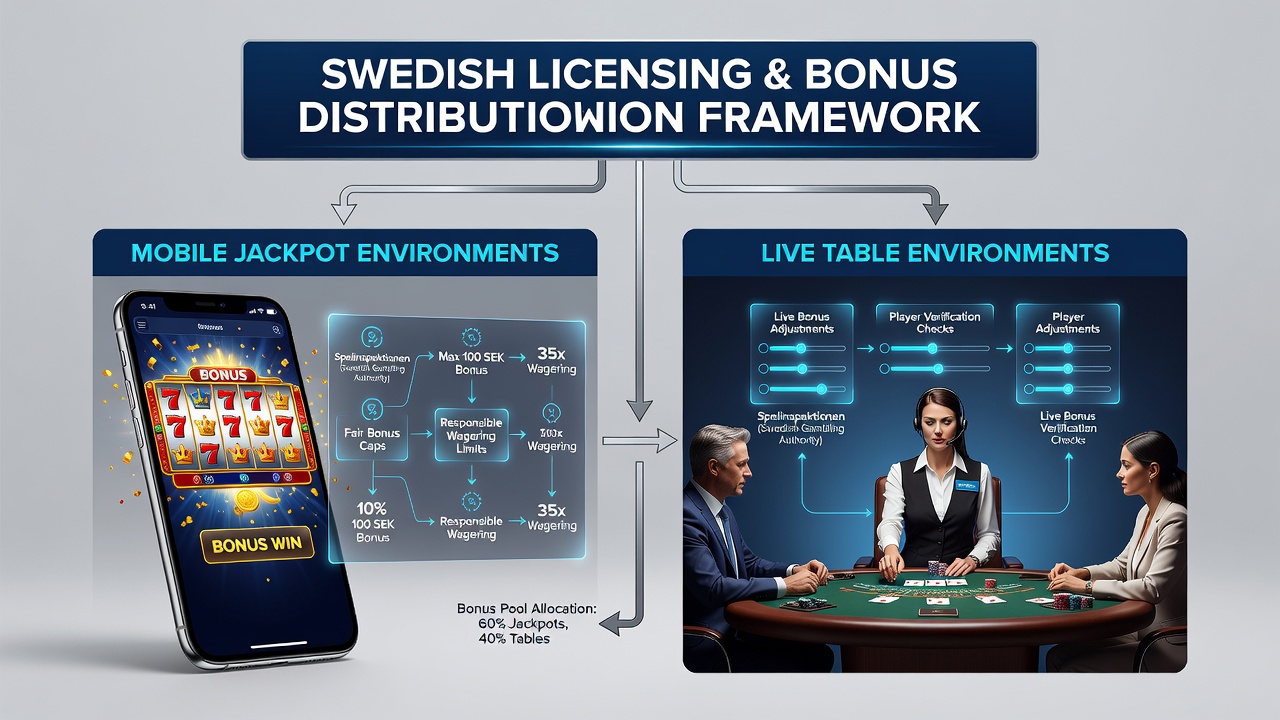
How Swedish Licensing Shapes Bonus Distribution in Mobile Jackpot and Live Table Environments
Sweden's licensing system under Spelinspektionen imposes clear boundaries on how operators distribute bonuses across mobile jackpot games and live table formats, and these rules continue to influence platform design as operators adjust to updates expected in November 2026. The authority requires that all promotional offers remain tied to verified player accounts, which limits repeated bonus claims and forces platforms to structure rewards around single-use mechanisms rather than recurring incentives.
Core Licensing Requirements and Bonus Allocation
Operators holding Swedish licenses must follow detailed accounting standards that separate bonus funds from player deposits, and this separation directly affects how jackpot contributions accumulate on mobile devices where sessions often last only minutes at a time. Data from Spelinspektionen shows that progressive jackpot pools receive contributions only after operators meet strict reserve requirements, which reduces the speed at which mobile jackpot meters climb compared with less regulated markets. Live table environments face additional scrutiny because real-time dealer interactions must display bonus terms without interrupting gameplay flow, leading many platforms to integrate bonus indicators into side panels rather than pop-up windows.
Mobile Jackpot Adjustments Under Current Rules
Mobile jackpot titles operate under wager caps that apply uniformly across all devices, yet the licensing framework places extra emphasis on session tracking for smaller screens where players frequently switch networks. Platforms respond by programming bonus eligibility checks to occur at the start of each spin sequence, which prevents mid-session promotions from altering jackpot contribution rates unexpectedly. Observers note that this approach keeps mobile jackpot environments compliant while still allowing operators to offer tiered bonus levels based on deposit size, provided each tier receives pre-approval and appears in the player's account dashboard before activation.
Live Table Integration and Promotional Limits
Live dealer tables present distinct challenges because bonus distribution must account for both automated RNG elements and human dealer pacing, and Swedish rules require that any table-specific promotions remain visible to all participants without creating unfair advantages. Operators therefore route bonus credits through centralized ledgers that update after each completed hand or round, ensuring that live table environments do not accumulate bonus liabilities faster than mobile jackpot systems. Research indicates that these synchronized ledgers have reduced the frequency of bonus-related disputes reported to Spelinspektionen since the framework tightened in prior years.

Platforms that combine mobile jackpot and live table offerings must maintain separate bonus pools for each category to satisfy audit trails, and this separation becomes especially relevant when operators introduce cross-game promotions that attempt to link jackpot progress with table play. Licensing conditions prohibit automatic transfer of bonus value between these environments without explicit player consent recorded through verified channels, which has prompted developers to add confirmation steps within mobile applications before any cross-category rewards activate.
November 2026 Regulatory Timeline and Expected Changes
Spelinspektionen has scheduled a review of bonus reporting templates for November 2026, and operators anticipate that the new templates will require more granular breakdowns of how mobile jackpot contributions and live table rake share interact with promotional budgets. Industry reports suggest these changes will standardize the timing of bonus releases across both environments, reducing the current variation where mobile platforms often unlock rewards faster than live dealer sessions. Those tracking compliance note that the upcoming templates also emphasize real-time monitoring of bonus velocity to prevent rapid cycling that could undermine responsible gambling measures already embedded in licensed platforms.
Conclusion
Swedish licensing continues to channel bonus distribution into structured pathways that treat mobile jackpots and live tables as distinct yet interconnected environments, and the November 2026 updates will likely refine those pathways further through enhanced reporting. Operators that align their systems with these requirements maintain access to the regulated market while delivering consistent player experiences across devices. The framework's emphasis on transparency and separate accounting remains the central mechanism shaping how bonuses appear and function in both settings.